
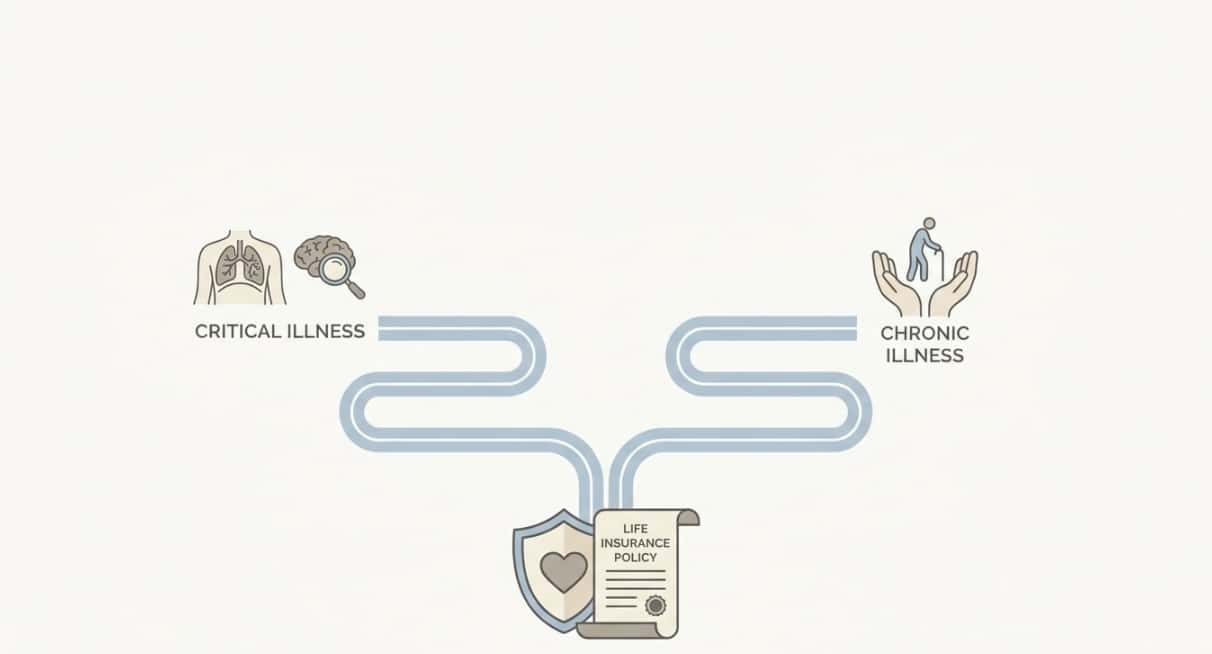
Critical illness rider vs chronic illness rider comes down to one core distinction: a critical illness rider pays out the moment you are diagnosed with a specific listed condition, while a chronic illness rider pays out only once you can no longer perform certain daily living activities, regardless of which condition caused that decline. Both let you access part of your life insurance death benefit while you are still alive, but they are triggered by completely different events, and mixing them up can leave you thinking you have protection you do not actually have.
When I first started researching the critical illness rider vs chronic illness rider question for my own family’s policy review, I assumed the two were basically interchangeable marketing terms for the same feature. They are not. One is essentially a diagnosis-based payout, and the other is a functional-impairment-based payout, and that difference changes everything about who should add which rider, and when.
I am not an insurance agent or underwriter, just an independent researcher who reads a lot of policy language and underwriting guides so you do not have to untangle it all yourself. Consider this the plain-English explanation I wish someone had handed me before I sat down with an agent.
Table of Contents
Critical Illness Rider vs Chronic Illness Rider: What Both Have in Common
Before getting into the differences, it helps to understand what a critical illness rider and a chronic illness rider actually share. Both are types of accelerated death benefit riders, sometimes called living benefit riders, attached to a life insurance policy. Both allow you to access a portion of your death benefit while you are still living, rather than forcing your family to wait until after you pass away. And in both cases, whatever amount you withdraw reduces the death benefit your beneficiaries will eventually receive.
Living benefit riders exist because a life insurance policy traditionally only paid out after death, even though a serious diagnosis or a debilitating condition can create just as much financial strain while you are still alive. This is the entire reason the critical illness rider vs chronic illness rider comparison matters in the first place: both riders solve the same underlying problem, but they solve it for very different situations.
Critical Illness Rider vs Chronic Illness Rider: The Core Difference
The fastest way to understand the critical illness rider vs chronic illness rider distinction is to focus on what actually triggers the payout.
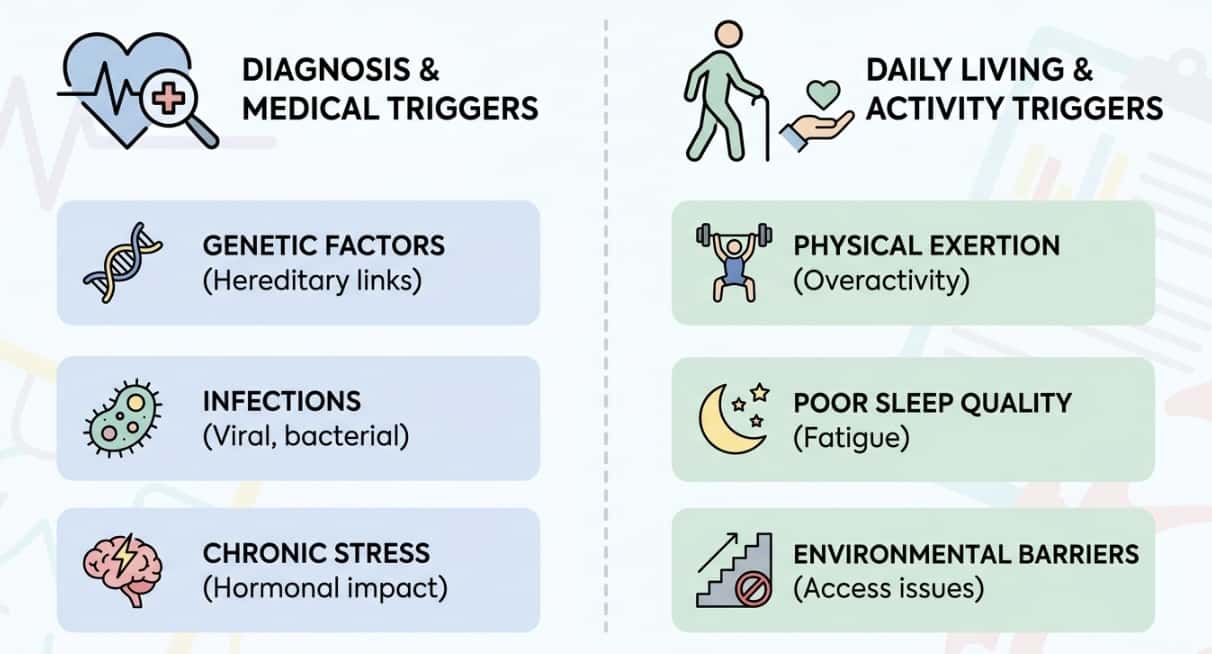
A critical illness rider pays a lump sum the moment you are diagnosed with a specific condition named in your policy, commonly including a heart attack, stroke, invasive cancer, kidney failure, or a major organ transplant. You do not need to be disabled, unable to work, or unable to care for yourself. The diagnosis alone is enough to trigger the benefit, and many people who claim under a critical illness rider go on to fully recover.
A chronic illness rider pays out based on functional impairment rather than diagnosis. Most policies require that you be unable to perform at least two of six recognized activities of daily living, which typically include bathing, dressing, eating, toileting, transferring, and continence, or that you have a severe cognitive impairment. The specific condition causing that impairment does not matter nearly as much as the fact that you now need ongoing help with basic daily tasks.
Insider note: A critical illness rider pays for a diagnosis. A chronic illness rider pays for a functional decline. This is the single most important thing to remember in the entire critical illness rider vs chronic illness rider comparison, because it explains every other difference between the two.

Critical Illness Rider vs Chronic Illness Rider: Side-by-Side Comparison Table
| Feature | Critical Illness Rider | Chronic Illness Rider |
|---|---|---|
| What triggers payout | Diagnosis of a specific listed condition | Inability to perform 2+ activities of daily living, or severe cognitive impairment |
| Common qualifying events | Heart attack, stroke, cancer, kidney failure, major organ transplant | Long-term conditions requiring ongoing care, such as advanced dementia, ALS, or progressive illness |
| Do you need to recover or not recover | Payout occurs regardless of eventual recovery | Condition is generally expected to be long-lasting or permanent |
| Payout timing | Shortly after diagnosis, often within weeks | After functional impairment is medically confirmed |
| Typical payout size | 25 percent to 100 percent of death benefit | 25 percent to 100 percent of death benefit |
| Relative cost | Often more expensive, since claims are more frequent | Often lower cost, since qualifying is more restrictive |
| Best suited for | Working-age people with dependents and limited savings | Older adults or anyone planning for long-term care needs |
Note that both riders reduce your policy’s remaining death benefit dollar-for-dollar once a claim is paid, so the table above describes how each rider is triggered, not what happens to your coverage afterward.
Critical Illness Rider vs Chronic Illness Rider: Who Benefits from the Critical Illness Side
When weighing critical illness rider vs chronic illness rider options for your own policy, start with the critical illness side. A critical illness rider tends to make the most sense for people whose financial life would be seriously disrupted by a major diagnosis long before any long-term functional decline sets in. A 45-year-old with two kids at home, a mortgage, and modest savings is a common example: a cancer or stroke diagnosis in that scenario creates an immediate need for cash, whether for treatment costs, lost income, or simply keeping the household running during recovery, well before any question of daily living assistance comes up.
If you are weighing a critical illness rider specifically because of a family history of heart disease, our guide on life insurance for seniors with heart conditions is worth reading first. If cancer is the bigger concern in your family history, our page on life insurance for seniors with cancer history covers how that risk factor is typically underwritten alongside a critical illness rider.
A critical illness rider tends to make less sense if you already carry strong disability insurance through work, since that coverage is already replacing lost income during a serious illness. It also tends to matter less if you have no dependents or if your major financial obligations, like a mortgage, are already paid off.
Critical Illness Rider vs Chronic Illness Rider: Who Benefits from the Chronic Illness Side
On the other side of the critical illness rider vs chronic illness rider comparison sits a different kind of risk entirely. A chronic illness rider is built for a different kind of risk entirely: the slow, expensive, and often years-long cost of needing help with basic daily activities. This is the scenario most people associate with long-term care, whether that means in-home assistance, an assisted living facility, or full-time nursing care.
This is why a chronic illness rider tends to resonate more with people thinking ahead to retirement, or with families who have already watched a parent or grandparent need this kind of help. If you are comparing a chronic illness rider against dedicated long-term care coverage, it helps to first understand the broader landscape of chronic illness riders for seniorsand how insurers structure the underlying qualifying criteria.
Some carriers set an annual or per-day cap on how much of the death benefit can be withdrawn tax-free under a chronic illness rider, adjusted for inflation each year, so it is worth asking your agent for the current-year limit rather than assuming an older figure still applies.
Critical Illness Rider vs Chronic Illness Rider: How Cost Typically Compares
Cost is one of the more counterintuitive parts of the critical illness rider vs chronic illness rider decision, and it is one of the first questions most readers ask once they understand the basic mechanics of a critical illness rider vs chronic illness rider. A critical illness rider is often the pricier of the two, specifically because claims happen more frequently. Heart attacks and strokes are common, and a meaningful share of people who experience one go on to survive and recover, which means the insurer expects to pay out more often over the life of a policy.
A chronic illness rider is frequently less expensive to add, sometimes even included at no additional cost on certain permanent policies, because the qualifying bar, needing help with two or more daily living activities or facing severe cognitive impairment, is harder to meet than simply receiving a diagnosis.
Rule to remember: Cheaper does not mean less valuable. A chronic illness rider often costs less specifically because the qualifying event is harder to trigger, not because the protection itself is weaker. Read the qualifying criteria carefully rather than comparing riders on price alone.
Critical Illness Rider vs Chronic Illness Rider: How These Riders Fit a Senior’s Policy
For older adults specifically, the critical illness rider vs chronic illness rider decision often overlaps with several other coverage questions at once, which is exactly why the critical illness rider vs chronic illness rider comparison rarely happens in isolation. If you are looking at a whole life policy and trying to decide which riders to prioritize, our broader guide to the best riders to add to a senior life policy and our roundup of life insurance riders for seniors are good starting references before you commit to either option.
If chronic illness protection is your main priority, our dedicated page on the best life insurance riders for chronic illness protection goes deeper into how insurers compare on this specific feature, and our general explainer on accelerated death benefits covers the mechanics that both riders share.
Because pre-existing conditions can affect whether either rider is even available to you, our guide to whole life insurance for seniors with pre-existing conditions and our page on life insurance for seniors with diabetes are worth reviewing if you have an existing diagnosis that might limit which riders you qualify for. And since the cost of living benefits varies significantly by carrier and policy type, our breakdown of the cost of life insurance with living benefits for senior citizenscan help you set realistic expectations before you start shopping.
If you are deciding between term and permanent coverage as the base policy these riders attach to, our guides on term life insurance for seniors over 70, whole life insurance for seniors over 70, and whole life insurance for seniors over 80explain how rider availability tends to differ between the two.
Critical Illness Rider vs Chronic Illness Rider: Common Mistakes People Make
Assuming they are the same thing. The single biggest mistake in the critical illness rider vs chronic illness rider comparison is assuming one covers what the other does. A critical illness rider will not help if you develop a slow, progressive condition that never technically qualifies as one of the listed illnesses. A chronic illness rider will not help if you are diagnosed with cancer but remain fully independent throughout treatment.
Waiting too long to add either rider. Both riders generally must be added when you first purchase your policy, or at least before you develop a qualifying condition. Once a chronic illness or cognitive impairment has already developed, qualifying for coverage becomes significantly harder, and in many cases no longer possible.
Not reading the list of covered conditions. Every carrier defines its own list of qualifying critical illnesses and its own standard for what counts as an activity of daily living. Two policies that both advertise a “critical illness rider” can have meaningfully different coverage depending on the fine print.
Forgetting the death benefit impact. Any payout under either rider reduces what your beneficiaries eventually receive. This is not a hidden fee, it is how the rider is designed to work, but it is worth discussing openly with whoever is named on your policy.
For general background on how common some of these qualifying conditions actually are, the CDC’s stroke data and statistics and the National Institute on Aging’s overview of activities of daily living are both useful, neutral references to read alongside anything an agent tells you.
Because underwriting rules, covered condition lists, and pricing for both sides of the critical illness rider vs chronic illness rider comparison vary significantly by carrier, the only real way to know your options is to compare actual, personalized quotes. I am an independent blogger, not an insurance company, so I cannot generate a binding quote myself. What I can tell you is to check your customized, real-time rates for free using the independent comparison platform Policygenius, which lets you compare policies and available riders across multiple carriers side by side.
If you are trying to compare several offers that each bundle these riders differently, our guide on comparing quotes and policies of life insurance over 80 and our list of mistakes to avoid in life insurance for seniors over 80 can help make sure you are comparing like for like rather than being swayed by rider names alone. And if a past health issue affected your rate class on the base policy, our guide on how to improve your life insurance health rating outlines steps that can help before you lock in a policy and its riders.
Frequently Asked Questions About Critical Illness Rider vs Chronic Illness Rider
Critical illness rider vs chronic illness rider: what is the main difference?
A critical illness rider pays out upon diagnosis of a specific listed condition, such as a heart attack, stroke, or cancer, regardless of whether you recover. A chronic illness rider pays out based on an inability to perform daily living activities or severe cognitive impairment, regardless of which condition caused it.
Can I have both a critical illness rider and a chronic illness rider on the same policy?
Yes, many policyholders add both for more comprehensive protection, since each rider covers a different kind of risk. Adding both means either qualifying event can trigger a payout, though both still draw from the same underlying death benefit.
Does a critical illness rider payout affect my life insurance death benefit?
Yes. Any amount paid out under either a critical illness rider or a chronic illness rider is deducted from your total death benefit, which means your beneficiaries will receive a reduced payout after you pass away.
Which rider is cheaper, critical illness or chronic illness?
Chronic illness riders are often less expensive to add, sometimes even included at no cost on certain permanent policies, because the qualifying bar is harder to meet. Critical illness riders tend to cost more since diagnoses like heart attacks and strokes happen more frequently and many people survive them.
Can I add either rider after I already have a diagnosis?
Generally, no. Both riders typically must be added when you first purchase the policy, before any qualifying condition develops. Trying to add either rider after a diagnosis has already occurred is usually not possible.
Where can I compare quotes that include these riders?
Because rider availability and pricing vary so much by carrier, the most reliable way to see accurate numbers is to compare real-time quotes through an independent platform like Policygenius, rather than assuming every policy bundles these riders the same way.
A Final Word
Critical illness rider vs chronic illness rider is not really a question of which one is better. It is a question of which risk you are actually trying to cover. A critical illness rider protects against the sudden financial shock of a serious diagnosis. A chronic illness rider protects against the slow, expensive reality of needing long-term help with daily life. Many people benefit from having both, but understanding exactly what triggers each one is the difference between assuming you are covered and actually being covered when it matters.