
Disability income rider seniors often research after hearing about it from a life insurance agent, but the honest answer is that this specific rider typically stops making financial sense the moment you fully retire, since it only pays out if you cannot work at an occupation you no longer hold. It is one of the few riders where the honest advice for most retirees is simply to skip it, and understand why waiver of premium usually matters more.
When I first came across this rider while comparing coverage options for a relative who had just retired, the thing that surprised me most was how a feature that sounds universally protective actually depends entirely on still being in the workforce. A disability income rider seniors add before retirement can genuinely help. The same rider added after retirement is close to dead weight.
I am not an insurance agent or a financial advisor. I am an independent researcher who reads a lot of policy language and underwriting guides so you do not have to untangle it all yourself. Consider this the honest, plain-English explanation a well-informed friend would give you before you pay for a rider that may not fit your situation.
Table of Contents
What a Disability Income Rider Seniors Add Actually Does
A disability income rider is an optional add-on to a life insurance policy that does two things if you become totally disabled: it waives your ongoing premium payments, and it pays you a monthly income benefit based on your policy’s face amount, commonly around 1 percent of the death benefit per month up to a stated cap. On a $500,000 policy, that could mean roughly $5,000 a month while you remain disabled. This rider typically adds 15 to 25 percent to your base premium, with the exact cost depending on your age, health, occupation, and coverage amount.
Insider note: Disability income rider seniors frequently confuse with a similar-sounding, less expensive rider called waiver of premium. Waiver of premium only stops your premium payments during a qualifying disability. It does not pay you a monthly income. A disability income rider does both, which is why it costs meaningfully more.
Why Disability Income Rider Seniors Options Change After Retirement
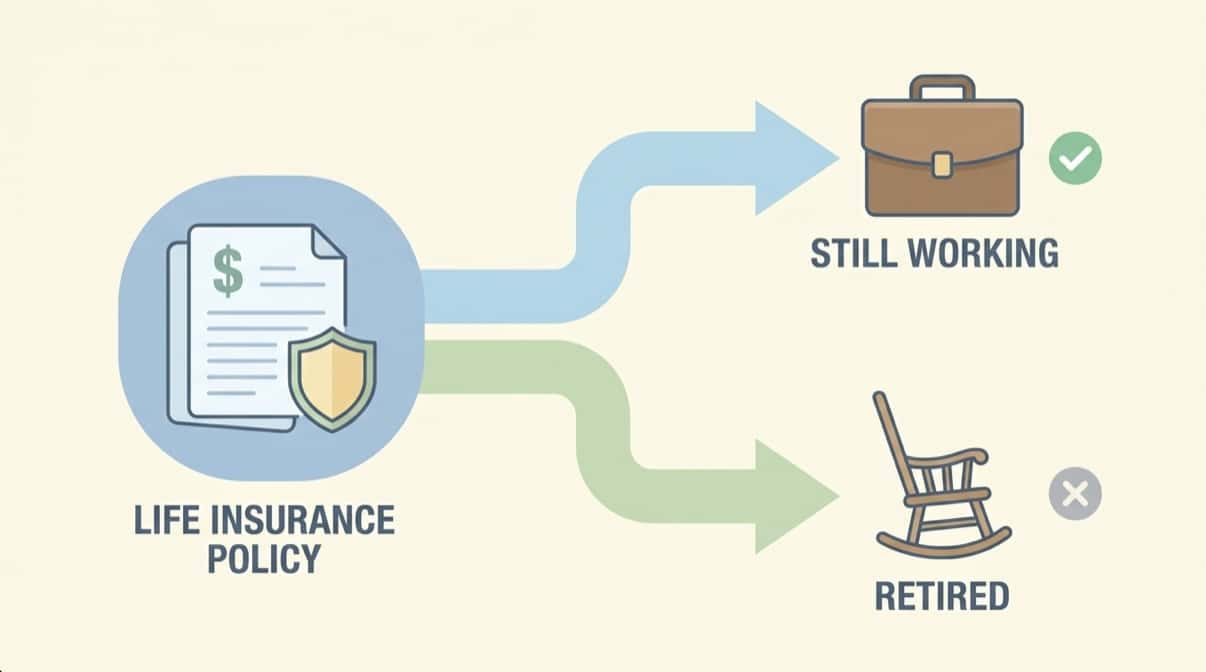
This is the part most sales conversations skip. A disability income rider pays out based on a specific legal definition of total disability, generally meaning you cannot perform the material duties of your own occupation, or in stricter policies, any occupation you are reasonably suited for by education, training, or experience. Once you have fully retired, that definition simply stops applying, since you no longer have an occupation to be disabled from. Retirees do not benefit from disability income riders in any practical sense, because the entire structure of the benefit depends on active employment.
This is exactly why disability income rider seniors research often ends the same way: the rider made sense at 55 while still working, and made far less sense the day retirement began. Disability income rider seniors who skip this step often end up paying for a benefit that was quietly disabled by their own retirement date.
Disability Income Rider Seniors Compare: vs Waiver of Premium
| Feature | Disability Income Rider | Waiver of Premium Rider |
|---|---|---|
| Waives premium if totally disabled | Yes | Yes |
| Pays a monthly income benefit | Yes, typically about 1 percent of face value monthly | No |
| Typical added cost | 15 to 25 percent of base premium | 5 to 15 percent of base premium |
| Relevant to someone still working | Yes, often meaningfully so | Yes |
| Relevant to a fully retired senior | Rarely, since the disability definition depends on active work | Still potentially useful if premiums remain in force |
| Best suited for | Working-age applicants without other income protection | Anyone wanting to protect the policy itself from lapsing |
For most fully retired seniors, waiver of premium is the more relevant of the two riders, and even that has a narrower role once Social Security or a pension has replaced a paycheck entirely, since the original purpose of protecting income during a working-age disability no longer applies in the same way.
When Disability Income Rider Seniors Add Still Makes Sense
Not everyone in this audience is fully retired. Disability income rider seniors who are still working in their late 50s or 60s, whether full-time, part-time, or as a consultant, can genuinely benefit from this rider if they lack comprehensive disability coverage elsewhere. If your employer’s group disability policy already replaces 60 percent or more of your income, adding this rider on top becomes largely redundant, since the two benefits would overlap. If you are self-employed, a business owner, or otherwise without solid disability coverage while still earning income, a disability income rider can be a reasonable form of protection during those final working years.
Rule to remember: The right question is not “am I a senior,” it is “am I still earning income from an occupation that a carrier could legally define as disabled.” If the answer is no, this specific rider has little left to offer you.
What Disability Income Rider Seniors Should Consider Instead
If a disability income rider no longer fits your situation, a few other riders and features tend to matter more once you are retired. Our overview of life insurance riders for seniors and the best riders to add to a senior life policy cover the options most relevant at this stage of life. Chronic and critical illness riders, in particular, address a genuinely common retirement risk, since they pay out based on a health event or functional decline rather than an employment status that no longer applies.
Our pages on chronic illness riders for seniors, critical illness life insurance for seniors, and the best life insurance riders for chronic illness protection explain how these work, and our direct comparison of critical illness rider vs chronic illness rider breaks down exactly how each one is triggered.
Our explainer on accelerated death benefits, our guide on how to determine the amount of accelerated death benefits, and our breakdown of the cost of life insurance with living benefits for senior citizens all cover how these more relevant riders actually function and what they typically cost to add.
How Health Conditions Interact With Disability Income Rider Seniors Decisions
If a health condition is part of why you are researching riders in the first place, our pages on life insurance for seniors with heart conditions, life insurance for seniors with diabetes, and life insurance for seniors with cancer history each explain how those specific conditions are underwritten, and our broader guide to whole life insurance for seniors with pre-existing conditions is worth reading as well.
Base Policy Options for Disability Income Rider Seniors to Compare
Riders only matter in the context of the base policy they attach to. If you are still deciding between term and permanent coverage, our overviews of term life insurance for seniors over 70, whole life insurance for seniors over 70, whole life insurance for seniors over 80, and the benefits of whole life insurance for seniors explain how each type is priced and which riders each typically supports. If you are still deciding whether any coverage makes sense at this stage of life, our guide on do I need life insurance after 70 walks through that broader decision from the ground up.
If premium affordability is your main concern, our guides on affordable life insurance options for seniors on a fixed income and lowering life insurance premiums for seniors on a fixed income cover concrete ways to trim costs, which matters more once a disability income rider is off the table and that premium budget can be redirected elsewhere. If a past health issue affected your rate class, our guide on how to improve your life insurance health rating may help lower your overall premium as well.
For veterans still working past traditional retirement age, our page on VA life insurance for seniors is worth checking, since some VA disability and life insurance benefits interact differently than private coverage does.
Common Mistakes Disability Income Rider Seniors Make
Adding this rider after retiring. Disability income rider seniors sometimes add out of habit or a salesperson’s suggestion. Paying an additional 15 to 25 percent in premium for a benefit that cannot realistically trigger once you no longer have an occupation is one of the more avoidable overpayments in senior life insurance planning.
Confusing it with waiver of premium. These are genuinely different riders with different costs and different benefits, and assuming they are interchangeable can lead to paying for the wrong one.
Not reviewing an existing rider at retirement. If you added a disability income rider while still working, it is worth asking your carrier whether that rider still serves any purpose now that you have retired, since the premium may be better spent elsewhere.
Assuming no rider is ever worth adding at this age. While a disability income rider generally is not the right fit for retirees, chronic and critical illness riders often are, since they address risks that remain genuinely relevant throughout retirement.
Not comparing carriers before adding any rider. Rider availability, cost, and definitions vary meaningfully between companies. Our guide on comparing quotes and policies of life insurance over 80 and our list of mistakes to avoid in life insurance for seniors over 80 can help you avoid overpaying once you have decided which riders actually fit your situation.
Because rider availability and pricing vary so much from one carrier to the next, the only way to know your actual options is to compare real, personalized quotes. I am an independent blogger, not an insurance company, so I cannot generate a binding quote myself. What I can tell you is to check your customized, real-time rates for free using the independent comparison platform Policygenius, which lets you compare policies and their available riders across multiple carriers side by side.
Frequently Asked Questions About Disability Income Rider Seniors
Is a disability income rider worth it for seniors?
For most fully retired seniors, no. Disability income rider seniors research consistently arrives at the same conclusion: this rider pays out based on an inability to work at an occupation, a definition that stops applying once you have retired. It can still make sense for seniors who are still working and lack other disability coverage.
What is the difference between a disability income rider and waiver of premium?
Waiver of premium only stops your premium payments during a qualifying disability. A disability income rider does that and also pays you a monthly income based on your policy’s face amount, which is why it costs more.
Why don’t retirees benefit from disability income riders?
The rider’s payout depends on a legal definition of total disability tied to your occupation. Once retired, you no longer have an occupation to be disabled from, so the core trigger for the benefit no longer applies.
Should I keep a disability income rider I added before retiring?
It is worth reviewing with your carrier or agent. Since the rider’s benefit generally cannot trigger once you have retired, the added premium may be better redirected toward other coverage or riders that remain relevant.
What riders should retired seniors consider instead?
Chronic illness riders, critical illness riders, and other accelerated death benefit features tend to be more relevant for fully retired seniors, since they address health-related risks rather than an employment status that no longer applies.
Where can I compare policies and riders that actually fit my situation?
Because rider availability and cost vary so much by carrier, the most reliable way to compare real options is through an independent platform like Policygenius, rather than assuming every policy offers the same riders at the same price.
A Final Word
Disability income rider seniors research is a good example of why it pays to ask what a rider actually requires before assuming it fits your stage of life. This particular rider was built for working-age protection, and for most fully retired seniors, it simply no longer applies the way it once did. The honest move is to redirect that premium toward riders and coverage that genuinely address the risks retirement actually brings, rather than paying for protection tied to a job you no longer have.