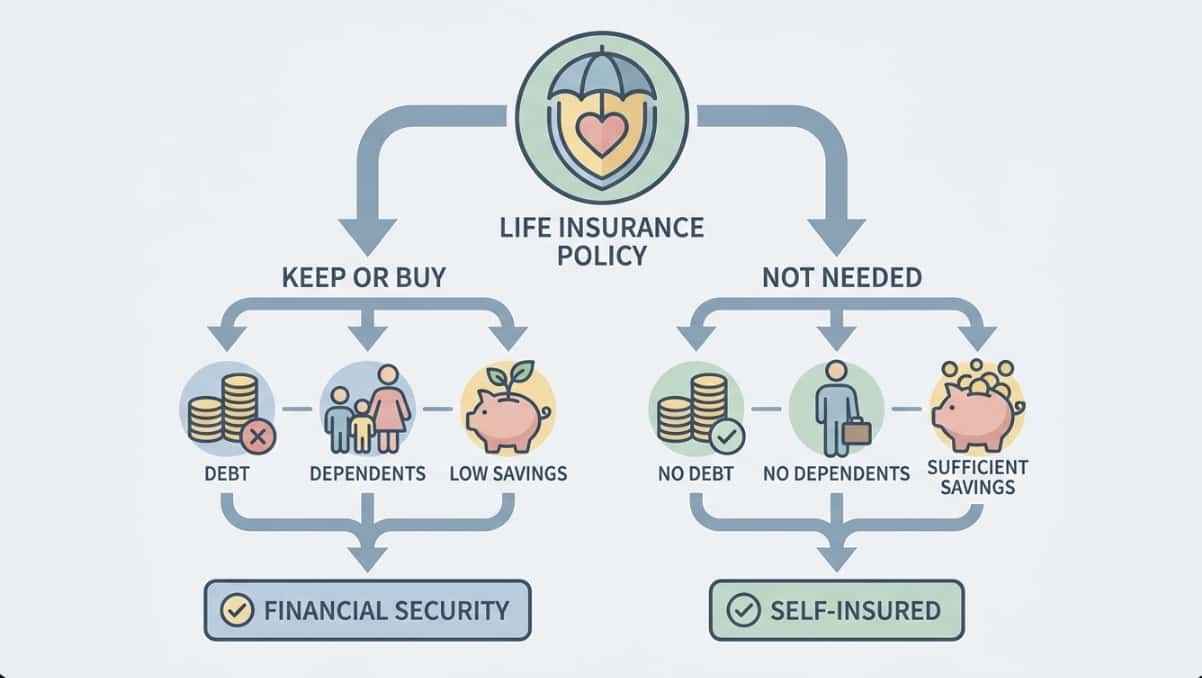
Do I need life insurance after 70 comes down to a short list of concrete questions: do you still have debt, does anyone depend on your income or Social Security benefit, and would your family struggle to cover funeral costs without you. If the answer to all three is no, you likely do not need life insurance after 70. If even one answer is yes, coverage is probably still worth a serious look, even at this stage of life.
When my own uncle asked me point blank whether he still needed his life insurance policy at 72, my first instinct was to say obviously yes, insurance is always a good idea. But that is lazy advice, and it is not actually true for everyone. The honest answer to do I need life insurance after 70 depends entirely on your specific financial picture, not on your age alone.
I am not an insurance agent or a financial advisor. I am an independent researcher who reads a lot of underwriting guides, cost data, and retirement planning research so you do not have to piece it together yourself. Think of this as the conversation a financially literate friend would have with you before you renew, buy, or cancel anything.
Table of Contents
Why This Question Feels So Different After 70
The reasons people bought life insurance in their thirties and forties, replacing decades of lost income, paying off a thirty-year mortgage, funding a child’s education, mostly do not apply once you are in your seventies. That is exactly why do I need life insurance after 70 is a genuinely different question than do I need life insurance at 35. Most major income-replacement needs are behind you by this point, so the calculation shifts toward a much narrower set of goals.
According to industry survey data, covering burial and final expenses is now the single most common reason Americans give for owning life insurance at all, ahead of income replacement or debt payoff. That shift matters enormously for anyone genuinely asking whether they need life insurance after 70, because it means the product itself has largely repositioned around a smaller, more specific job than it used to do.
Insider note: If your main financial goals were paying off the house, raising your kids, and funding retirement, and all three are already accomplished, the honest answer to do I need life insurance after 70 might simply be no. That is a legitimate outcome, not a failure to plan ahead.
The Core Questions That Actually Answer “Do I Need Life Insurance After 70”
Rather than guessing, work through these questions in order. They tend to surface the real answer faster than any generic rule of thumb.
Do you still have debt that would transfer to your estate? A mortgage, a car loan, or credit card balances do not disappear when you pass away. They get paid from your estate before anyone inherits anything, which can shrink what your family actually receives. If debt is part of your picture, our guide on avoiding debt in retirement is worth reading before you decide either way.
Does anyone depend on your income, pension, or Social Security benefit? A surviving spouse who relies on your Social Security payment or your pension can see a real drop in household income after you pass away. This single factor is consistently cited as one of the strongest remaining reasons to keep coverage after 70.
Would your family struggle to cover funeral and burial costs? The average funeral in the United States now runs well over $9,000 once you include the burial or cremation itself, and that figure often does not include a headstone, an obituary, or a reception. Our state-by-state breakdown of the average funeral cost by state shows just how much this number can shift depending on where you live.
Are you pursuing estate planning goals? If you have a larger estate, life insurance can help heirs cover estate taxes or preserve other assets rather than liquidating them to pay a tax bill. Our guides on the best life insurance for estate planning, life insurance for seniors over 80 and estate planning benefits, and beneficiary considerations for seniors over 80all go deeper into this specific use case.
Do you want to leave a legacy gift or supplement retirement income? Some retirees keep or buy permanent coverage specifically to leave money to a grandchild, a charity, or to use the policy’s cash value as a supplemental income source during retirement.
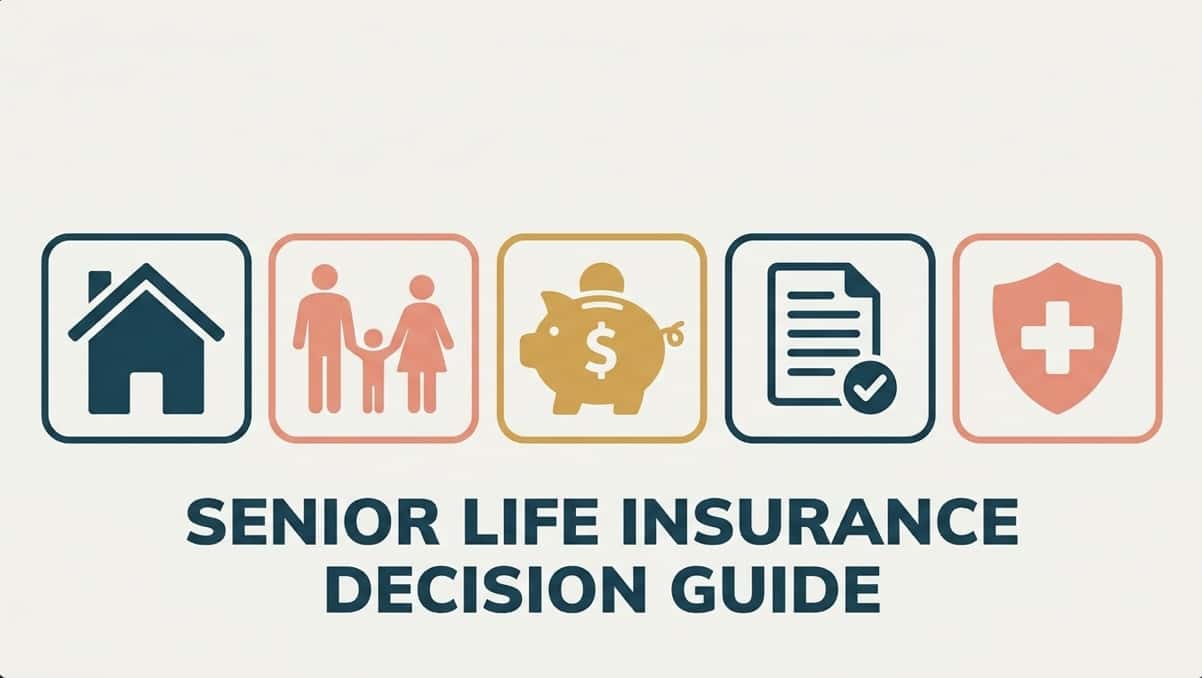
A Quick Decision Table
| Your Situation | Likely Answer to “Do I Need Life Insurance After 70” |
|---|---|
| Debt-free, no dependents, savings cover final expenses | Probably not, though a small policy can still simplify things for your family |
| Spouse relies on your Social Security or pension income | Likely yes, to help replace that income gap |
| Outstanding mortgage or other significant debt | Likely yes, to prevent that debt from reducing your estate |
| No savings set aside for funeral or burial costs | Likely yes, even a modest final expense policy can help |
| Large estate with potential estate tax exposure | Possibly yes, permanent coverage can help offset tax liability for heirs |
| Already have enough life insurance in force to cover these goals | Probably not, unless your needs have grown since you bought it |
This table is a starting point, not a verdict. Two people in nearly identical financial situations can reach different conclusions about do I need life insurance after 70 depending on how much peace of mind matters to them personally.
What It Actually Costs to Get Coverage
If you have decided the answer to do I need life insurance after 70 is yes, cost is naturally the next question. Pricing varies enormously depending on policy type, health, and coverage amount, and it is worth seeing real ranges before you assume coverage is unaffordable.
| Policy Type | Typical Monthly Cost at 70 (approximate) | Best For |
|---|---|---|
| 10-year term life | Around $130 to $220 per month for $250,000 in coverage | Healthy applicants who want temporary, larger coverage |
| Whole life insurance | Roughly $700 to $1,300 per month for $250,000 in coverage | Lifelong coverage plus cash value growth |
| Guaranteed issue final expense | Premiums vary widely for $5,000 to $25,000 in coverage | Seniors with health conditions who want no-exam approval |
| No medical exam term or whole life | Higher than fully underwritten policies of the same size | Anyone who wants to skip the medical exam entirely |
These figures are general estimates, and your actual rate will depend heavily on your age, gender, health, tobacco use, and the specific carrier you apply with. That gap between term and whole life pricing is exactly why so many people asking do I need life insurance after 70 end up choosing a smaller, simpler final expense policy rather than a large term or whole life policy.
Policy Types Worth Comparing
Once you have answered do I need life insurance after 70 with a yes, the next decision is which type of policy actually fits.
- Term life insurance. Our guide to term life insurance for seniors over 70 explains why this can still be the most affordable option for healthy applicants who only need coverage for a limited number of years.
- Whole life insurance. For lifelong coverage and cash value growth, our pages on whole life insurance for seniors over 70, whole life insurance for seniors over 80, and the benefits of whole life insurance for seniors walk through how premiums and benefits compare to term coverage.
- Guaranteed acceptance policies. If health conditions make traditional underwriting difficult, guaranteed acceptance life insurance for seniors over 70, guaranteed acceptance life insurance for seniors over 80, and guaranteed issue whole life for seniors remove medical questions entirely, usually in exchange for a smaller death benefit and a graded benefit period.
- No medical exam coverage. If you would rather skip the physical exam altogether, no medical exam life insurance for seniors, our breakdown of the cost of no medical exam life insurance for seniors, our comparison of no medical exam versus traditional life insurance for seniors, and our guide to qualifying for no medical exam life insurance as a senior are all worth comparing against traditional underwriting.
- Higher coverage amounts without an exam. If a typical no-exam face amount is not enough, high-limit no-exam life insurance is worth exploring before assuming a larger policy requires a full medical exam.
- Final expense insurance. For most people whose main concern is funeral and burial costs, final expense insurance for seniors, our detailed look at final expense insurance costs, our roundup of the best final expense insurance companies for seniors, and our guide on qualifying for final expense insurance with health issues are all practical starting points.
- Burial insurance specifically. Our dedicated guides to burial insurance for seniors over 70 and the best burial insurance for seniors over 70 cover this narrower, typically lower-cost option in more detail.
- Coverage for a specific older age. If you are researching this question for yourself, a parent, or a spouse who is a bit older, life insurance for seniors over 80, can an 80-year-old get life insurance, can an 83-year-old get life insurance, and can an 84-year-old get life insurance all cover that stage specifically. If you are helping a parent through this decision rather than making it for yourself, our guide on buying life insurance for an elderly parent and our page on VA life insurance for seniors for veterans are both worth a look.
- Coverage with pre-existing conditions. If a heart condition, diabetes, or a cancer history is part of the picture, our guides on whole life insurance for seniors with pre-existing conditions, life insurance for seniors over 80 with pre-existing conditions, life insurance for seniors with heart conditions, life insurance for seniors with diabetes, and life insurance for seniors with cancer history explain how each condition tends to be underwritten.
Riders Worth Considering If Do I Need Life Insurance After 70 Is a Yes
If you determine that the answer to do I need life insurance after 70 is yes, it is worth also reviewing what riders might strengthen that coverage. Our overview of life insurance riders for seniors covers the most common add-ons, while our page on chronic illness riders for seniors and our explainer on accelerated death benefits both describe how you can access part of your death benefit while still living, should a serious health decline occur.
Rule to remember: A rider is not required to answer do I need life insurance after 70, but if you are already buying a policy, it is worth checking whether a modest rider closes a gap you had not otherwise planned for, like the cost of long-term care.
Do I Need Life Insurance After 70 on a Fixed Income
Many people who conclude that yes, they need life insurance after 70, immediately run into a second concern: fitting the premium into a retirement budget that no longer has room for surprises. Our guides on affordable life insurance options for seniors on a fixed income and lowering life insurance premiums for seniors on a fixed income both address this directly, and are worth reading together with this one if budget is your main hesitation.
When the Honest Answer to Do I Need Life Insurance After 70 Is “No”
It is worth saying plainly: not everyone needs life insurance after 70, and that is a completely legitimate conclusion. If you are debt-free, your dependents are financially independent, and you already have enough savings set aside to cover funeral costs and any final medical bills, keeping or buying a policy may simply not add much value. In that scenario, the money you would spend on premiums may do more for you invested elsewhere or kept liquid for other needs.
The mistake to avoid here is canceling an existing policy reflexively just because you have reached a certain age, without actually running through the questions above first. Plenty of people cancel a policy at 70 only to realize a few years later that their spouse’s income situation changed, or that a health event created new financial exposure they had not planned for.
Common Mistakes People Make When Deciding Do I Need Life Insurance After 70
Assuming age alone answers the question. Do I need life insurance after 70 is a financial question, not an age question. Your specific debts, dependents, and savings matter far more than the number of candles on your last birthday cake.
Overbuying coverage you do not need. If your only remaining goal is covering a funeral, there is little reason to buy a large term policy sized for income replacement. Right-sizing coverage to your actual goal keeps premiums manageable.
Underestimating funeral and final expense costs. Many people assume their savings will comfortably cover final costs, without checking real numbers first. Comparing your savings against the actual average funeral cost by state for your area is a useful gut check before deciding you do not need coverage.
Not comparing more than one carrier. Underwriting standards and pricing vary significantly by company at this age. Our guide on comparing quotes and policies of life insurance over 80 and our list of mistakes to avoid in life insurance for seniors over 80 can help you avoid overpaying once you have decided coverage makes sense.
Forgetting to revisit the decision periodically. Do I need life insurance after 70 is not a question you answer once and forget. A change in health, a spouse’s income, or a new grandchild can all shift the answer over time.
Because pricing and underwriting for seniors over 70 vary so widely from one carrier to the next, the only real way to know your options is to compare actual, personalized quotes. I am an independent blogger, not an insurance company, so I cannot generate a binding quote myself. What I can tell you is to check your customized, real-time rates for free using the independent comparison platform Policygenius, which lets you compare offers from multiple carriers side by side without committing to a sales call.
For general background on estate tax thresholds that can affect this decision for larger estates, the IRS’s official estate tax page is worth a look, and the Administration for Community Living’s long-term care statistics are a useful, neutral reference if long-term care risk is part of what is driving your decision.
Frequently Asked Questions About Do I Need Life Insurance After 70
Do I need life insurance after 70 if I am debt-free with no dependents?
Not necessarily. If you have no outstanding debt, your dependents are financially independent, and you have savings set aside to cover funeral and final expenses, a large policy may add little value. A small final expense policy is still worth considering if you want to avoid tapping savings for that specific cost.
What is the most common reason people keep life insurance after 70?
Covering funeral and burial costs is now the single most commonly cited reason Americans give for owning life insurance at any age, and it is especially common among people specifically weighing do I need life insurance after 70.
Is term life insurance still available after 70?
Yes, though most carriers only offer shorter term lengths, often 10 years, to applicants over 70. If you want a longer guaranteed term, applying sooner rather than later generally gets you better options.
What if I have health conditions that make traditional coverage hard to get?
Guaranteed acceptance and no medical exam policies are specifically designed for this situation. They typically come with smaller death benefits and higher premiums per dollar of coverage, but they remove medical underwriting almost entirely.
Can life insurance help with estate taxes after 70?
For larger estates, yes. A permanent life insurance policy can provide liquidity that helps heirs pay estate taxes without needing to sell other assets. This is a narrower use case than funeral coverage, but it is a real one for higher-net-worth households.
Where can I get a free, real quote to help me decide?
Because pricing varies so much by carrier, age, and health, the most reliable way to see accurate numbers is to compare real-time quotes through an independent platform like Policygenius, rather than assuming a single company’s rate reflects your options everywhere.
A Final Word
Do I need life insurance after 70 is a question worth answering honestly rather than emotionally. It is not about whether insurance is generally a good idea, it is about whether your specific debts, dependents, and savings actually create a gap that coverage would close. Walk through the questions above, get a couple of real quotes if the answer leans yes, and revisit the decision again in a year or two, since very little about retirement finances stays static for long.