
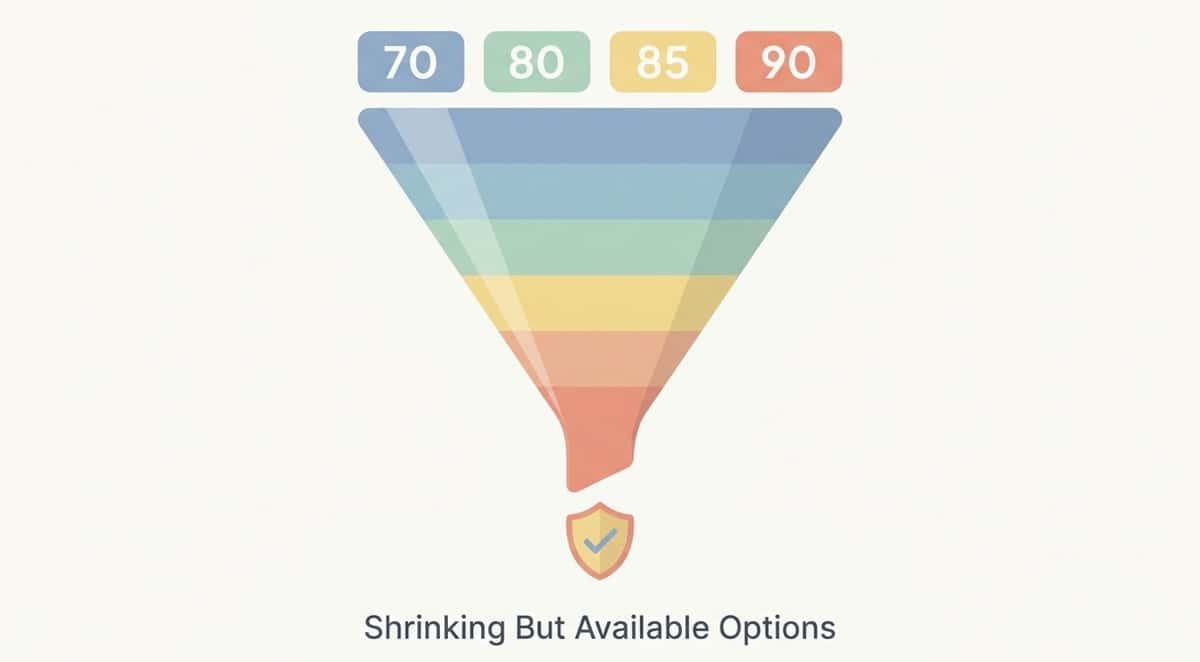
Final expense insurance for seniors over 85 is still available in 2026, though the options narrow considerably compared to coverage offered in your 70s or early 80s. Only a small number of carriers continue issuing new policies past age 85, coverage amounts typically cap between $10,000 and $25,000, and every applicant at this age must answer health questions since guaranteed issue coverage generally disappears once you cross the 85th birthday mark.
When I started researching final expense insurance for seniors over 85 for an older relative, the thing that surprised me most was how much the market genuinely changes at this specific age. It is not that coverage vanishes entirely, it is that the door narrows to a handful of specialized carriers willing to keep writing policies for applicants in their late eighties and beyond.
I am not an insurance agent or a company representative. I am an independent researcher who reads a lot of carrier bulletins, underwriting guides, and cost data so you do not have to compare it all yourself. Consider this the plain-English rundown a well-informed friend would walk you through before you call anyone.
Table of Contents
Can You Actually Get Final Expense Insurance for Seniors Over 85?
Yes. Final expense insurance for seniors over 85 remains available, but most major national carriers stop issuing new policies once an applicant turns 80 or 85. Beyond that age, only a handful of specialized insurers continue writing new coverage, and most cap new applications somewhere between age 89 and 90. If you are 86 or older, expect a shorter list of available companies and a policy that requires answering health questions rather than a fully guaranteed issue application.
Insider note: Guaranteed issue coverage, meaning no health questions at all, generally is not available once you pass age 85. Every remaining option at this age involves at least a short health questionnaire, even though a medical exam is still not required.
What Is Actually Different About Final Expense Insurance for Seniors Over 85
Final expense insurance for seniors over 85 differs from coverage offered to younger seniors in a few concrete ways. Coverage amounts are smaller, typically maxing out between $10,000 and $25,000 rather than the higher limits sometimes available to applicants in their 60s and 70s. Term life, universal life, and other larger traditional policies are essentially unavailable at this age, which means a small whole life final expense policy becomes the only realistic option. Many of the companies still active in this narrow market also work exclusively through independent brokers rather than allowing direct applications, since a broker can match your specific health profile to the carrier most likely to approve you.
Coverage Amounts and Costs by Age Range
The table below reflects general patterns reported across multiple independent 2026 sources. Actual availability, coverage caps, and pricing will vary by state, carrier, and individual health profile.
| Age Range | Typical Maximum Coverage | Guaranteed Issue Available | Medical Exam Required |
|---|---|---|---|
| 70 to 79 | Up to $25,000 to $50,000 depending on carrier | Often yes | No |
| 80 to 85 | Typically $10,000 to $25,000 | Increasingly limited | No |
| 86 to 90 | Typically $10,000 to $25,000 | Generally not available | No, but health questions required |
| Above 90 | New applications rarely accepted | Not available | Not applicable |
What Final Expense Insurance for Seniors Over 85 Actually Costs
Premiums rise steeply at this age, reflecting the shorter statistical life expectancy underwriters are pricing around. A $10,000 final expense policy for someone over 85 can commonly run somewhere between $170 and $300 or more per month, depending on gender, health, and whether the policy is simplified issue or one of the rarer guaranteed issue options still technically available in a narrow window.
| Coverage Amount | Approximate Monthly Cost for Applicants Over 85 |
|---|---|
| $5,000 | Roughly $85 to $150 per month |
| $10,000 | Roughly $170 to $300 or more per month |
| $15,000 | Roughly $250 to $450 or more per month |
| $25,000 | Roughly $400 to $750 or more per month |
For context on how these numbers compare to younger age brackets, our detailed breakdown of final expense insurance costs and our page on final expense insurance for seniors generally walk through pricing at earlier ages for comparison.
How Underwriting Works for Final Expense Insurance for Seniors Over 85
Final expense insurance for seniors over 85 almost always relies on simplified issue underwriting rather than guaranteed issue. This means no medical exam, no blood test, and no nurse visit, but you will need to answer a short series of health questions covering things like recent hospitalizations, terminal diagnoses, dialysis, or oxygen use. Applicants without serious disqualifying conditions can often be approved quickly, sometimes within a day or two, while those with more significant health histories may need additional review or a smaller offered amount.
Our guide on qualifying for final expense insurance with health issues covers how specific conditions are typically evaluated, and our pages on life insurance for seniors with heart conditions, life insurance for seniors with diabetes, and life insurance for seniors with cancer history each explain how those specific conditions are underwritten. If you are researching pre-existing conditions more broadly at this age, our guides to whole life insurance for seniors with pre-existing conditions and life insurance for seniors over 80 with pre-existing conditions are worth reviewing as well.
Working With an Independent Agency for Final Expense Insurance for Seniors Over 85
Because so few companies remain in this market, working with an independent broker rather than a single company directly tends to produce better results for final expense insurance for seniors over 85. A broker can compare your specific age, gender, health profile, and state against the small pool of carriers still accepting new applications and steer you toward the one most likely to offer approval and the best available rate. Our roundup of the best final expense insurance companies for seniors and our page on the best companies for final expense coverage for elderly applicants both cover which carriers tend to have the most flexible underwriting at older ages.
Rule to remember: A “no” from one large national carrier does not mean coverage is impossible. Several smaller, specialized insurers focus specifically on applicants in their late eighties and nineties, and comparing more than one option matters more at this age than at any earlier stage of life.
Alternatives If You Are Declined for Final Expense Insurance for Seniors Over 85
If traditional final expense insurance for seniors over 85 is not available due to a significant health condition, a few alternatives are still worth considering. A smaller coverage amount is sometimes approvable even when a larger request is declined. Applying through more than one broker or carrier can surface an option that a single company missed.
Setting aside dedicated savings specifically earmarked for funeral costs, sometimes through a pre-need funeral trust arranged directly with a funeral home, is another practical fallback when insurance coverage genuinely is not an option.
Our guides on burial insurance for seniors over 70 and the best burial insurance for seniors over 70 are also worth reviewing if you are researching this topic earlier, before turning 85, when guaranteed issue options like guaranteed issue whole life for seniors, guaranteed acceptance life insurance for seniors over 70, and guaranteed acceptance life insurance for seniors over 80 are still available.
How Much Coverage Actually Makes Sense
Final expense insurance for seniors over 85 is generally sized around funeral and burial costs rather than income replacement, since income replacement needs are typically long behind you by this stage of life. The median cost of a funeral with burial has reached well over $8,000, and many traditional services now run between $8,000 and $13,000 once every cost is included. Our state-by-state breakdown of the average funeral cost by state is a useful reference point for sizing coverage to your specific area, since costs vary meaningfully depending on where you live.

Should You Even Buy Final Expense Insurance for Seniors Over 85?
Not every senior over 85 needs to buy a new policy. If you already have savings set aside specifically for final expenses, or existing coverage that adequately covers funeral costs, final expense insurance for seniors over 85 may add little additional value. Our guide on do I need life insurance after 70 walks through this broader decision framework, much of which still applies at an older age, just with a narrower set of available policy types to choose from.
If you are researching this topic on behalf of a parent rather than yourself, our guide on buying life insurance for an elderly parent addresses the specific consent and conversation issues that come up. For age-specific eligibility questions, our pages on life insurance for seniors over 70, life insurance for seniors over 80, can an 80-year-old get life insurance, can an 83-year-old get life insurance, and can an 84-year-old get life insurance all cover how eligibility narrows with each additional year of age. Veterans should also check our page on VA life insurance for seniors before assuming private final expense coverage is the only route available.
If estate planning goals extend beyond simple funeral coverage, our guides to the best life insurance for estate planning, life insurance for seniors over 80 and estate planning benefits, and beneficiary considerations for seniors over 80 are worth reading alongside this guide.
A Word of Caution Before You Buy Final Expense Insurance for Seniors Over 85
Because final expense insurance for seniors over 85 is often purchased during a moment of genuine urgency, whether due to a health scare or a family member’s growing concern, this age group is unfortunately a frequent target for pressured or misleading sales tactics. Our guides on avoiding financial scams targeting seniors and avoiding life insurance scams aimed at the elderly cover the warning signs worth knowing before signing anything. If a past health issue affected a previous application’s outcome, our guide on how to improve your life insurance health rating may still offer useful context even at this narrower stage of eligibility.
Common Mistakes People Make
Assuming coverage is impossible after 85. Options exist, they are simply more limited and concentrated among a small group of specialized carriers rather than the large national names most people recognize.
Applying to only one company. Because so few carriers remain active in this market, and each weighs health factors differently, comparing quotes across several options meaningfully improves your odds of approval and a fair rate. Our guide on comparing quotes and policies of life insurance over 80 and our list of mistakes to avoid in life insurance for seniors over 80 can help you avoid settling for the first offer you receive.
Overbuying coverage beyond what funeral costs actually require. Since income replacement is rarely the goal at this age, sizing coverage to your area’s actual average funeral cost avoids paying for more than you need.
Waiting too long to apply. Since eligibility narrows with each passing year and many carriers cap new applications around age 89 or 90, delaying the decision can close off options that were previously available.
Because pricing and eligibility for final expense insurance for seniors over 85 change so much from one carrier to the next, the only reliable way to know your actual options is to compare real, personalized quotes. I am an independent blogger, not an insurance company, so I cannot generate a binding quote myself. What I can tell you is to check your customized, real-time rates for free using the independent comparison platform Policygenius, which lets you compare offers from multiple carriers side by side without committing to a sales call.
For a neutral look at national funeral cost trends that can help you size coverage appropriately, the National Funeral Directors Association’s cost statistics are a useful, independent reference to check alongside any quote you receive.
Frequently Asked Questions About Final Expense Insurance for Seniors Over 85
Can you get final expense insurance for seniors over 85?
Yes, though options are limited to a small number of specialized carriers, most of which work through independent brokers rather than direct applications, and coverage typically caps between $10,000 and $25,000.
Is guaranteed issue coverage available for final expense insurance for seniors over 85?
Generally, no. Guaranteed issue coverage with no health questions typically disappears once an applicant passes age 85, meaning every remaining option requires answering a short health questionnaire, even though a medical exam is still not required.
How much does final expense insurance for seniors over 85 cost?
A $10,000 policy commonly runs between $170 and $300 or more per month at this age, depending on gender, health, and whether the policy is simplified issue or one of the rarer guaranteed issue options still available in a narrow window.
What is the maximum age to apply for a new policy?
Most carriers cap new applications somewhere between age 89 and 90, though a small number of specialized insurers may extend slightly beyond that in limited cases.
What if I am declined for coverage due to a health condition?
A smaller coverage amount is sometimes still approvable, and comparing more than one broker or carrier can surface options that a single company missed. Dedicated savings or a pre-need funeral trust are practical fallbacks if insurance genuinely is not available.
Where can I compare real quotes for coverage at this age?
Because pricing and eligibility vary so much by carrier, the most reliable way to see accurate numbers is to compare real-time quotes through an independent platform like Policygenius, rather than assuming a single company’s decision reflects every available option.
A Final Word
Final expense insurance for seniors over 85 is narrower than coverage available at younger ages, but it is far from impossible. The families who navigate this stage most successfully understand that the market has genuinely changed at this age, work with someone who can compare the small remaining pool of carriers, and size coverage realistically around actual funeral costs rather than a much larger figure. A “no” from one company is rarely the final answer.