
End of life financial planning is the process of organizing your assets, debts, insurance policies, beneficiary designations, and funeral wishes so that your family can settle your affairs without confusion, delay, or unnecessary cost after you pass away. It is a broader task than simply writing a will, since it also covers who can manage your money if you become incapacitated, how your accounts and policies are titled, and what your family will actually need to pay for in the days immediately following your death.
When I helped a close family member work through her own end of life financial planning after a health scare, the thing that surprised me most was how much of the process had nothing to do with legal paperwork at first. Most of the early conversations were about beneficiary forms nobody had updated in twenty years and a life insurance policy she was not even sure was still in force.
I am not an attorney, a financial advisor, or an estate planner. I am an independent researcher who reads a lot of retirement planning data, insurance disclosures, and consumer guidance so you do not have to piece it all together yourself. Consider this the practical, honest checklist a well-informed friend would walk you through before you sit down with a professional.
Table of Contents
Why End of Life Financial Planning Matters More Than Most People Realize
The data on how many families actually complete this process is genuinely sobering. Recent research found that only about 46 percent of older adults have completed an end of life planning checklist or advance care directive, and separate surveys have found that fewer than 34 percent of American adults have a will at all, with fewer than 30 percent having an advance healthcare directive in place. Among people without these documents, a large share, around 62 percent in one survey, admit they have simply been procrastinating, while another 15 percent say they did not know how to complete the necessary paperwork in the first place.
The financial stakes behind this gap are significant. A private room in a nursing home can run well over $160,000 a year in some regions, and roughly 70 percent of people turning 65 today will eventually need some form of long-term care. End of life financial planning is what stands between a family calmly executing a clear plan and a family scrambling through court proceedings, unclear beneficiary forms, and unexpected costs during an already difficult time.
Insider note: End of life financial planning is not a one-time task you finish and file away. Major life events, remarriage, the birth of a grandchild, a relocation, or a significant change in assets, are all natural triggers to revisit and update your plan, since an outdated beneficiary designation can send your money to the wrong person entirely.
The Core Documents Behind End of Life Financial Planning
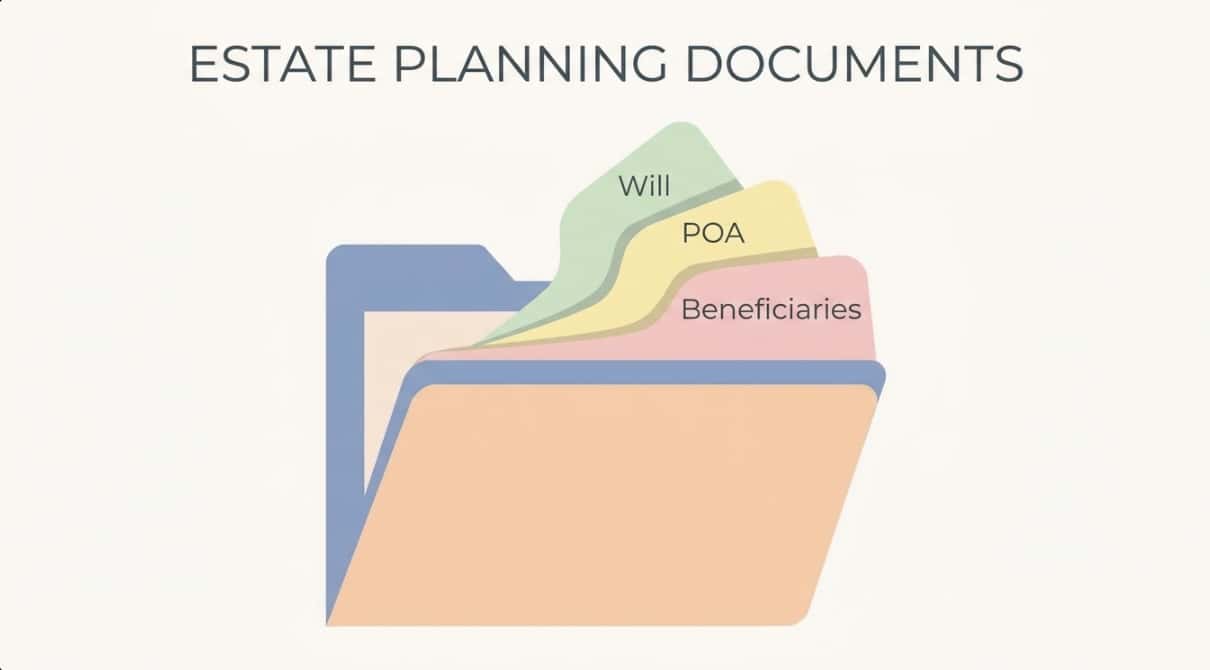
A complete plan generally includes a specific set of documents, each serving a distinct purpose.
| Document | What It Actually Does |
|---|---|
| Will | Directs how remaining assets are distributed after death |
| Revocable living trust | Can help assets avoid probate and lets a successor trustee step in during incapacity |
| Durable financial power of attorney | Lets a trusted person manage your finances if you become unable to |
| Healthcare power of attorney | Designates who makes medical decisions on your behalf if you cannot |
| Advance directive or living will | Documents your medical treatment preferences in writing |
| Beneficiary designations | Directly determines who receives retirement accounts, life insurance proceeds, and similar assets, regardless of what a will says |
| Funeral and burial preferences | Spells out your wishes and can be paired with prepaid or insurance-funded arrangements |
Beneficiary designations deserve special attention in end of life financial planning, since these forms override whatever your will says. A retirement account or life insurance policy will pay out to whoever is listed on the beneficiary form, even if your will names someone else entirely, which is exactly how outdated paperwork can accidentally send money to an ex-spouse or a person no longer in your life.
The Financial Side of End of Life Financial Planning
Beyond the legal documents, end of life financial planning also means organizing the practical, dollars-and-cents side of your affairs so your family is not left guessing.
A complete inventory of assets and debts. This includes bank accounts, investment accounts, retirement accounts, real estate, and any outstanding loans or credit balances, along with account numbers and institution contact information kept somewhere secure and accessible to your executor.
An accurate list of insurance policies. Life insurance, long-term care insurance, and final expense policies should all be documented clearly, including the carrier, policy number, and beneficiary on each one. Our guides on final expense insurance for seniors and final expense insurance costs are useful references if this piece of your plan is still incomplete.
Funeral and burial cost planning. Our state-by-state breakdown of the average funeral cost by state is a useful starting point for understanding roughly what your family should expect to budget for, and whether existing savings or a policy adequately covers that cost. If you have not yet secured coverage for this specific expense, our guides to burial insurance for seniors over 70 and the best burial insurance for seniors over 70 cover how that type of policy typically works.
Digital assets and account access. Email accounts, online banking logins, and subscription services are increasingly part of end of life financial planning, since a family without access to these accounts can face real delays closing out a person’s affairs.
How Life Insurance Fits Into End of Life Financial Planning
Life insurance often sits at the center of end of life financial planning, since it can provide immediate liquidity for a family at exactly the moment other assets may be tied up in probate. If a larger estate is part of your picture, our guides on the best life insurance for estate planning, life insurance for seniors over 80 and estate planning benefits, and our related guide on estate planning benefits are worth reading together. Our page on beneficiary considerations for seniors over 80 is especially relevant here, since keeping those designations current is one of the simplest but most frequently neglected parts of end of life financial planning.
If accessing part of a death benefit while still living is relevant to your situation, our explainer on accelerated death benefits, our guide on how to determine the amount of accelerated death benefits, and our breakdown of the cost of life insurance with living benefits for senior citizens all cover how those features work within a broader plan.
If you are still deciding whether life insurance coverage even makes sense at this stage, our guide on do I need life insurance after 70walks through that decision directly, and if you are helping a parent complete this process rather than doing it for yourself, our guide on buying life insurance for an elderly parent addresses the specific consent and conversation issues involved.
Rule to remember: A life insurance policy is only as useful as the accuracy of its beneficiary form. Reviewing that single document every few years is one of the highest-value, lowest-effort steps in end of life financial planning.
Coordinating the Rest of Your Retirement Finances
End of life financial planning does not happen in isolation from the rest of your retirement budget. Our breakdown of Medicare costs and budgeting covers one of the biggest recurring expenses competing with any savings you have earmarked for end of life costs, and our guide on avoiding debt in retirement is worth reading alongside this one, since outstanding debt reduces what your estate actually leaves behind.
If a major life transition, like selling a home, is part of your broader plan, our guide on downsizing finances for seniorscovers how that decision interacts with both your monthly budget and your estate. And since unexpected costs can derail even a well-organized plan, our guide on building an emergency fund for seniors pairs naturally with the broader goal of end of life financial planning, since a solid cash cushion protects the rest of your plan from being disrupted by a single surprise expense.
Protecting Your Plan From Scams
Because end of life financial planning often involves sharing sensitive financial details and sometimes large sums of money, this process can unfortunately attract predatory sales tactics or outright fraud targeting older adults. Our guides on avoiding financial scams targeting seniors and avoiding life insurance scams aimed at the elderly cover the warning signs worth knowing before you sign anything or share account details with someone claiming to help.

Reviewing and Comparing Existing Coverage
If part of your end of life financial planning involves reviewing life insurance policies you already own, or shopping for coverage you do not yet have, our guide on comparing quotes and policies of life insurance over 80 and our list of mistakes to avoid in life insurance for seniors over 80 can help you avoid overpaying or ending up with a policy that no longer matches your actual needs.
For an official, neutral overview of consumer protections around end of life costs, the FTC’s Funeral Rule explains the disclosures funeral providers are legally required to give families, and AARP’s year-end financial planning checklistoffers a useful, independent seasonal reminder to revisit beneficiary designations and other details covered here.
Common Mistakes People Make
Assuming a will covers everything. Beneficiary designations on retirement accounts and life insurance policies override a will entirely, which means an outdated form can send assets to the wrong person no matter what the will says.
Treating end of life financial planning as a one-time task. Life events like remarriage, a new grandchild, or a relocation should all trigger a review, since an unreviewed plan can quietly become outdated within just a few years.
Not telling anyone where the documents are. A complete plan is only useful if your family or executor actually knows it exists and can find it when needed.
Underestimating funeral and end-of-life costs. Comparing your actual savings and coverage against real regional cost data helps avoid an unpleasant surprise for your family at an already difficult time.
Skipping the financial power of attorney. A will only takes effect after death, so without a durable financial power of attorney in place, a family may need to pursue an expensive and public court process to manage your finances if you become incapacitated first.
Because insurance products play such a central role in most end of life financial planning, the only way to know your real options is to compare actual, personalized quotes rather than relying on assumptions. I am an independent blogger, not an insurance company, so I cannot generate a binding quote myself. What I can tell you is to check your customized, real-time rates for free using the independent comparison platform Policygenius, which lets you compare offers from multiple carriers side by side without committing to a sales call.
Frequently Asked Questions
What does end of life financial planning actually include?
It typically includes a will, a durable financial power of attorney, a healthcare power of attorney, an advance directive, current beneficiary designations, an inventory of assets and debts, insurance policy details, and documented funeral and burial preferences.
How many people actually complete end of life financial planning?
Recent research suggests fewer than half of older adults have completed even a basic checklist or advance directive, and fewer than 34 percent of American adults have a will at all, leaving a significant planning gap for many families.
Why do beneficiary designations matter so much?
Beneficiary forms on retirement accounts and life insurance policies override what a will says. An outdated designation can send assets to a former spouse or another unintended person, regardless of your other legal documents.
How often should end of life financial planning be updated?
It is worth reviewing your plan after any major life event, including marriage, divorce, the birth of a grandchild, a relocation, or a significant change in assets, and doing a general review at least every few years even without a specific trigger.
Does life insurance play a role in end of life financial planning?
Yes, often a central one. Life insurance proceeds typically pay out faster than assets tied up in probate, providing immediate liquidity for funeral costs, debts, or ongoing family expenses.
Where can I compare life insurance options as part of this process?
Because policy features and pricing vary significantly by carrier, the most reliable way to compare real options is through an independent platform like Policygenius, rather than relying on assumptions about a single company’s offerings.
A Final Word
End of life financial planning is uncomfortable to start and easy to postpone, which is exactly why so many families never finish it. The version that actually protects your loved ones does not need to be complicated. Start with an honest inventory of your documents, confirm your beneficiary designations are current, make sure someone knows where everything is kept, and revisit the plan whenever life changes in a meaningful way. A modest amount of organization now saves your family from a much larger burden later.